%20(1).jpg)
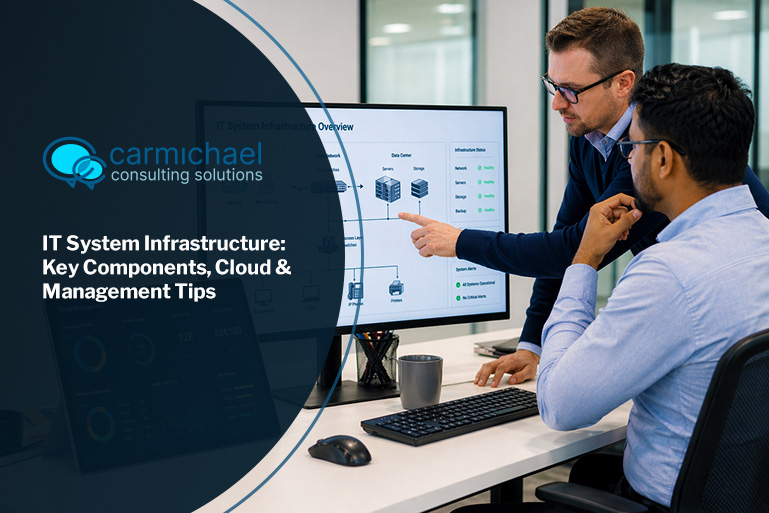
Every business today relies on IT system infrastructure to keep operations running smoothly. Whether you’re handling customer data, managing remote teams, or scaling up your services, a strong IT foundation is essential. In this blog, you’ll learn what makes up IT system infrastructure, the main types and components, how infrastructure management works, and why modernization matters. We’ll also cover key benefits, practical steps, and common challenges, including topics like cloud, network, compute, server, data center, and more.
IT system infrastructure is the backbone of your business technology. It includes all the hardware and software needed to support daily business operations, from servers and storage systems to network equipment and operating systems. Without reliable infrastructure, even basic tasks like accessing files or sending emails can become difficult or impossible.
A well-designed IT system infrastructure helps your company stay productive, secure, and ready for growth. It also supports business continuity by making sure your data and systems are protected against outages or disasters. As technology evolves, keeping your infrastructure up to date is key to staying competitive and meeting changing business needs.

Managing IT system infrastructure takes more than just installing equipment. Here are some essential strategies to help you get the most from your investment:
Start by reviewing your current hardware, software, and network components. This helps you identify gaps, outdated systems, or areas where performance could be improved. Regular assessments make it easier to plan upgrades and avoid unexpected downtime.
Protecting your infrastructure from threats is critical. Make sure you have strong security measures in place, such as firewalls, antivirus software, and regular updates. Stay aware of industry regulations that may affect how you manage data and systems.
Cloud infrastructure offers flexibility and scalability that traditional systems can’t match. Moving some or all of your services to the cloud can help you respond quickly to changing business demands and reduce upfront costs. Learn more about cloud solutions.
Use monitoring tools to track system performance, uptime, and resource usage. Early detection of issues lets you fix problems before they impact your business.
Have a clear plan for backing up data and restoring services in case of an outage or cyberattack. Regularly test your recovery processes to ensure they work when needed.
Automation can save time and reduce errors. Use management systems to handle software updates, backups, and other repetitive tasks so your team can focus on higher-value work.
Make sure your team understands how to use and manage your IT system infrastructure. Ongoing training helps prevent mistakes and keeps everyone up to date with new technologies.
A strong IT system infrastructure should offer these important features:

Modern IT system infrastructure is more than just new hardware. It’s about creating a flexible, secure, and efficient environment that supports your business goals. Upgrading to modern systems can improve performance, reduce costs, and make it easier to adopt new technologies like cloud computing or platform as a service.
Modernization also helps you stay ahead of threats and meet regulatory requirements. With the right infrastructure, you can quickly adapt to market changes, support remote work, and deliver better experiences to your customers. Investing in IT infrastructure modernization is a smart move for any business looking to stay competitive.
There are several types of IT system infrastructure, each with its own strengths. Here’s a closer look at the main types and what they include:
This type relies on physical hardware like servers, storage systems, and network equipment located on-site. It offers full control but can be costly to maintain and scale.
Cloud infrastructure uses remote servers and services delivered over the internet. It offers scalability, flexibility, and often lower upfront costs. You can choose public, private, or hybrid cloud models based on your needs.
Hyperconverged systems combine compute, storage, and networking into a single solution. This makes management easier and can reduce hardware costs.
Virtualization allows you to run multiple operating systems and applications on a single physical server. It improves resource use and supports rapid scaling.
Network infrastructure connects all your devices and systems, enabling communication and data sharing. It includes routers, switches, firewalls, and wireless access points.
A data center houses all your critical IT equipment in a secure, controlled environment. It provides reliable power, cooling, and connectivity for your systems.
Cloud computing lets you access computing resources on demand. Infrastructure as a service (IaaS) provides virtual servers, storage, and networking without the need to buy or manage physical hardware.
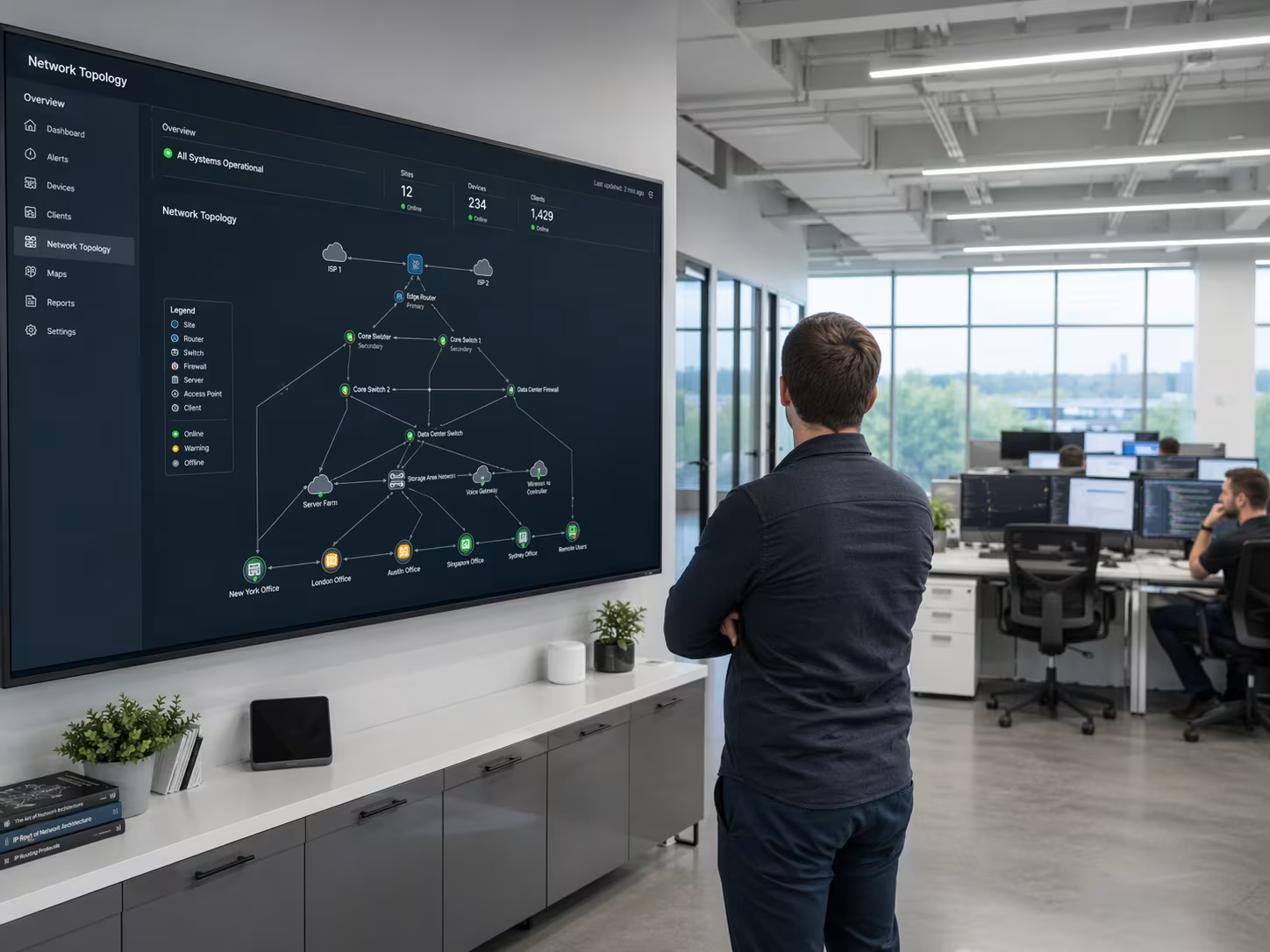
Optimizing your IT system infrastructure is an ongoing process. Start by identifying your current and future business needs. Assess which systems need upgrades or replacement, and consider moving some workloads to the cloud for better scalability.
Work with your IT team or a trusted partner to design infrastructure that supports your goals. Focus on security, performance, and ease of management. Regularly review your systems and processes to find new opportunities for improvement. By staying proactive, you can avoid costly downtime and keep your business running smoothly.
Modernizing your IT system infrastructure can be challenging, but these best practices can help:
Following these steps will help ensure a smooth transition and lasting benefits from your IT infrastructure modernization efforts.
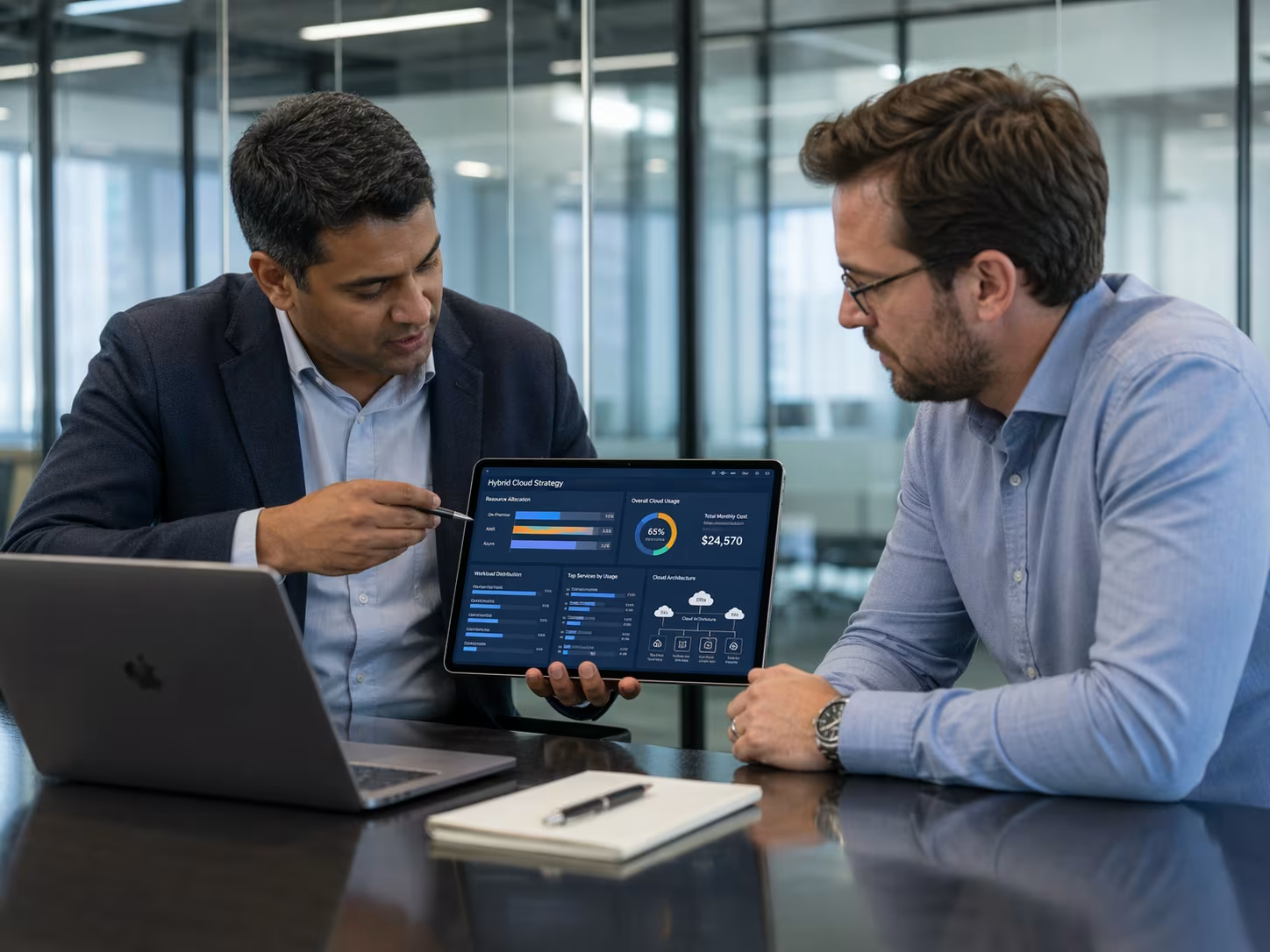
Are you a business with 10 to 350 employees looking to improve your IT system infrastructure? If you’re growing and need reliable systems that scale with your needs, we understand the unique challenges you face. Our team specializes in helping businesses like yours build, manage, and modernize their IT infrastructure for long-term success.
We know that every organization is different. That’s why we offer tailored services and solutions to fit your goals, whether you need help with infrastructure design, cloud migration, or ongoing infrastructure management. Contact us today to see how we can support your business.
The main components of IT system infrastructure include hardware like servers, storage systems, and network devices, as well as software such as operating systems and management tools. Together, these elements support your business operations and keep your technology running smoothly.
Having the right infrastructure components ensures reliable performance and helps protect against downtime. Regular reviews and updates can help you stay ahead of technology changes and business needs.
Infrastructure management involves monitoring, maintaining, and optimizing your IT systems to ensure they work efficiently. It covers tasks like software updates, security checks, and performance monitoring.
Effective management systems help prevent issues before they disrupt your business. They also make it easier to scale your technology as your company grows.
Cloud infrastructure offers scalability and flexibility, allowing you to quickly adjust resources as your business changes. It can also reduce upfront costs by eliminating the need for physical hardware.
Cloud service providers handle maintenance and security, freeing up your team to focus on core business activities. This makes cloud computing a popular choice for many organizations.
Traditional IT infrastructure gives you full control over your hardware and software, but it can be expensive and harder to scale. Modern IT infrastructure, including cloud and virtual solutions, offers more flexibility and easier management.
Consider your business needs, budget, and growth plans when deciding which type is best for you. Consulting with experts can help you make the right choice.
Service management ensures your IT services meet business requirements and deliver value. It covers planning, delivery, and support for all technology-related services.
Good service management practices help align IT with your business goals, improve customer relationship management, and support business continuity.
To ensure business continuity, develop a clear plan for backing up data and restoring systems after outages or disasters. Use reliable storage systems and test your recovery processes regularly.
Investing in infrastructure security and having a well-designed technology infrastructure helps minimize risks and keeps your business running smoothly.
After almost 15 years working in corporate Information Technology in Atlanta, Georgia, Tyler Jones left his role as Vice President of Service Operations with a national payroll provider in 2011 to start Carmichael Consulting Solutions, LLC.


.svg)
-svg.webp)
.svg)