%20(1).jpg)
What we often see with businesses is that they treat incident response steps as a checklist to complete, rather than a cycle to improve. The most effective teams know that incident response is not just about reacting to a security incident, but about learning and adapting every time. Industry research shows that organizations with a clear incident response plan recover faster and reduce the impact of breaches.
"A strong incident response process is the difference between a minor disruption and a major security breach."
If you're new to the topic, incident response steps are the actions your team takes when a cybersecurity incident happens. These steps help you contain threats, minimize damage, and get your systems back to normal. Having a structured approach means your incident response team can act quickly and confidently, no matter the type of security incident. Understanding what an incident response plan is and how to create a cybersecurity incident response plan is key for any business that wants to stay prepared and resilient.
Every organization faces the risk of a security incident, whether it’s a phishing attack, malware infection, or data breach. That’s why having clear incident response steps is essential. These steps form the backbone of your incident response plan, guiding your response teams through each phase of the process.
The incident response plan should outline roles and responsibilities, communication channels, and escalation paths. By following a structured response framework, your security team can detect issues early, contain threats quickly, and recover with less disruption. This approach also helps you meet compliance requirements and protect your reputation.
A well-defined incident response process is not just about reacting to problems. It’s about being ready to handle any situation, learning from each event, and making your systems stronger over time. The National Institute of Standards and Technology (NIST) provides a widely used incident response framework that many businesses follow to ensure consistency and effectiveness.
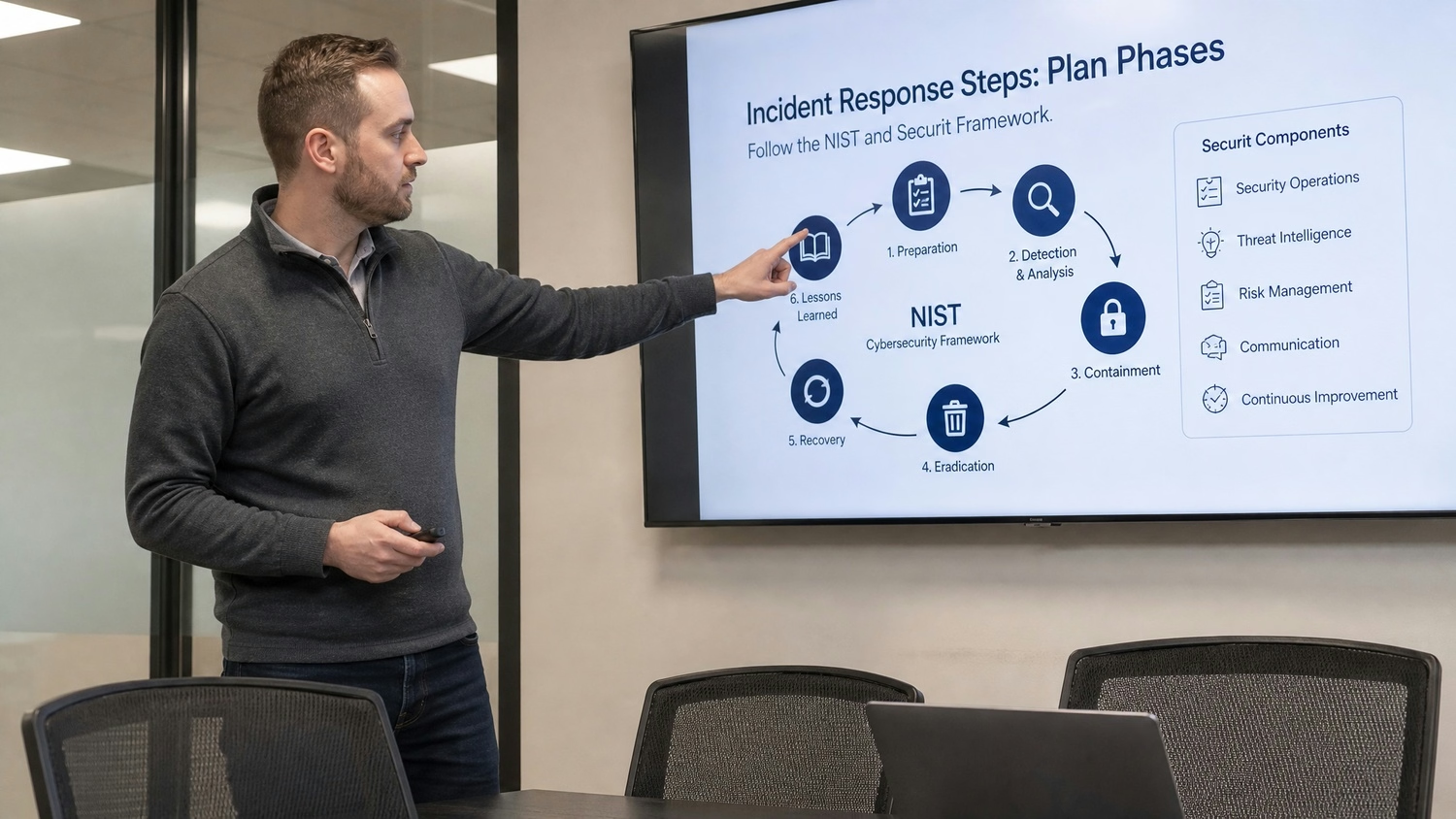
Knowing the right incident response steps can make all the difference when a security incident occurs. Here are the six key phases that every business should follow:
Preparation is about making sure your team, tools, and processes are ready before an incident happens. This includes training your staff, setting up security tools, and making sure everyone knows their roles. Preparation helps you respond faster and more effectively when something goes wrong.
Identification is the phase where you detect and confirm that a security incident is happening. Quick identification means you can limit the damage early. Use monitoring tools and clear reporting processes so your team can spot issues right away.
Containment focuses on stopping the threat from spreading. This could mean isolating affected systems or blocking malicious network traffic. The goal is to keep the incident from causing more harm while you investigate further.
Once the threat is contained, eradication is about removing the cause of the incident. This might involve deleting malware, closing vulnerabilities, or changing passwords. It’s important to make sure all traces of the threat are gone before moving on.
Recovery is the process of restoring systems and data to normal operation. You’ll want to make sure everything is clean and secure before bringing systems back online. Careful recovery helps prevent the same issue from happening again.
After the incident is resolved, take time to review what happened and how your team responded. Document what worked, what didn’t, and update your incident response plan as needed. This phase helps you improve for the next time.
A clear set of incident response steps brings several advantages:

A reliable incident response framework is more than just a set of instructions—it’s a way to build trust and resilience. When your team follows a proven framework, like the NIST incident response life cycle, you can be sure that every phase is covered and nothing is missed.
Frameworks help standardize your response, so everyone knows what to do and when. This reduces confusion during high-pressure situations and ensures that critical steps, like containment and communication, are handled properly. By using a framework, you also make it easier to train new team members and keep your processes up to date.
For growing businesses, a structured approach means you can scale your security efforts as your company expands. Whether you have a dedicated computer security incident response team or rely on IT staff to handle incidents, a framework keeps everyone aligned and ready to act.
Having the right people and tools in place is essential for effective incident response. Here’s how your team and technology should work together:
Your incident response team should include members from IT, security, management, and communications. Each person should know their roles and responsibilities, from technical investigation to public relations. A well-coordinated team can act quickly and avoid costly mistakes.
Modern response tools help you spot threats early. These can include intrusion detection systems, endpoint protection, and security information and event management (SIEM) platforms. The right tools make it easier to identify and track incidents as they happen.
Sometimes, you may need to involve external response teams, such as managed security providers or law enforcement. Clear communication and predefined escalation paths ensure everyone works together smoothly.
Keep detailed records of every step taken during an incident. Documentation helps with compliance, supports lessons learned, and provides a reference for future incidents.
Regularly review each phase of your process to find areas for improvement. This keeps your response plan current and effective as threats evolve.
Designate an incident handler to oversee the response. This person coordinates the team, makes decisions, and ensures all steps are followed.
Run regular training sessions and simulated incidents to keep your team sharp. Practice helps everyone stay calm and focused when a real incident occurs.

Putting incident response steps into action takes planning and commitment. Start by defining what is an incident response plan for your organization. Make sure your plan covers all the phases of an incident response, from preparation to lessons learned.
Work with your security team to identify the types of security incidents most likely to affect your business. Set up response tools and monitoring systems to detect issues quickly. Assign clear roles and responsibilities so everyone knows what to do when an incident occurs.
Finally, review and update your plan regularly. As your business grows and new threats emerge, your incident response process should evolve too. This ongoing effort keeps your company protected and ready for anything.
To keep your incident response plan strong, follow these best practices:
Staying proactive with these practices helps your business stay resilient and secure.

Are you a business with 10 to 350 employees looking to strengthen your security posture? Growing companies often face new risks as they expand, and having the right incident response steps in place can make all the difference when a breach occurs.
At Carmichael Consulting Solutions, we help businesses build, test, and improve their incident response plans. Our team guides you through every phase, from preparation to recovery, ensuring your response framework is ready for any challenge. Contact us today to protect your business and keep your operations running smoothly.
An incident response plan is a documented strategy that outlines how your organization will handle a security incident. It defines roles and responsibilities, communication protocols, and step-by-step actions for your incident response team. Having a plan ensures your response teams can act quickly and reduce the impact of a breach.
Without a plan, your business risks confusion and delays during a cybersecurity incident. A clear incident response plan helps you meet compliance requirements and protects your reputation by showing customers and partners you take security seriously.
The phases of incident response—preparation, identification, containment, eradication, recovery, and lessons learned—provide a structured approach to handling incidents. Each phase guides your security team through the right actions at the right time.
By following these phases, you can minimize damage, recover faster, and learn from every incident. This cycle of improvement strengthens your overall cybersecurity posture and keeps your business resilient.
The NIST incident response framework is a set of guidelines developed by the National Institute of Standards and Technology. It outlines best practices for managing computer security incidents and is widely used by businesses of all sizes.
Following the NIST framework helps your organization standardize its response process, making it easier to train staff and ensure compliance. It also provides a clear structure for handling any type of security incident.
Your incident response team should include IT professionals, security experts, management, and communications staff. Each member should have defined roles and responsibilities for different phases of the response.
A diverse team ensures you can handle technical investigations, internal communications, and external reporting. Regular training helps your team stay ready for any cybersecurity incident.
Common types of security incidents include malware infections, phishing attacks, data breaches, and unauthorized access. Each type requires a tailored response based on your incident response plan.
Understanding the different types of incidents helps your response teams prepare and respond effectively. Regular reviews and updates to your plan keep your business protected against new threats.
You should review your incident response process at least once a year or after any major incident. Regular reviews help you identify gaps and update your response framework as your business changes.
Continuous improvement ensures your security tools and procedures stay current. This proactive approach keeps your company prepared for any future security breach.
After almost 15 years working in corporate Information Technology in Atlanta, Georgia, Tyler Jones left his role as Vice President of Service Operations with a national payroll provider in 2011 to start Carmichael Consulting Solutions, LLC.


.svg)
-svg.webp)
.svg)



%2520(1).avif)